


Hybrid Esthetic Treatment In “Aesthetics of Difference”
페이지 정보

본문
Hybrid Esthetic Treatment
A New Prosthodontic Paradigm Where Function and Aesthetics Converge in an “Aesthetics of Difference”
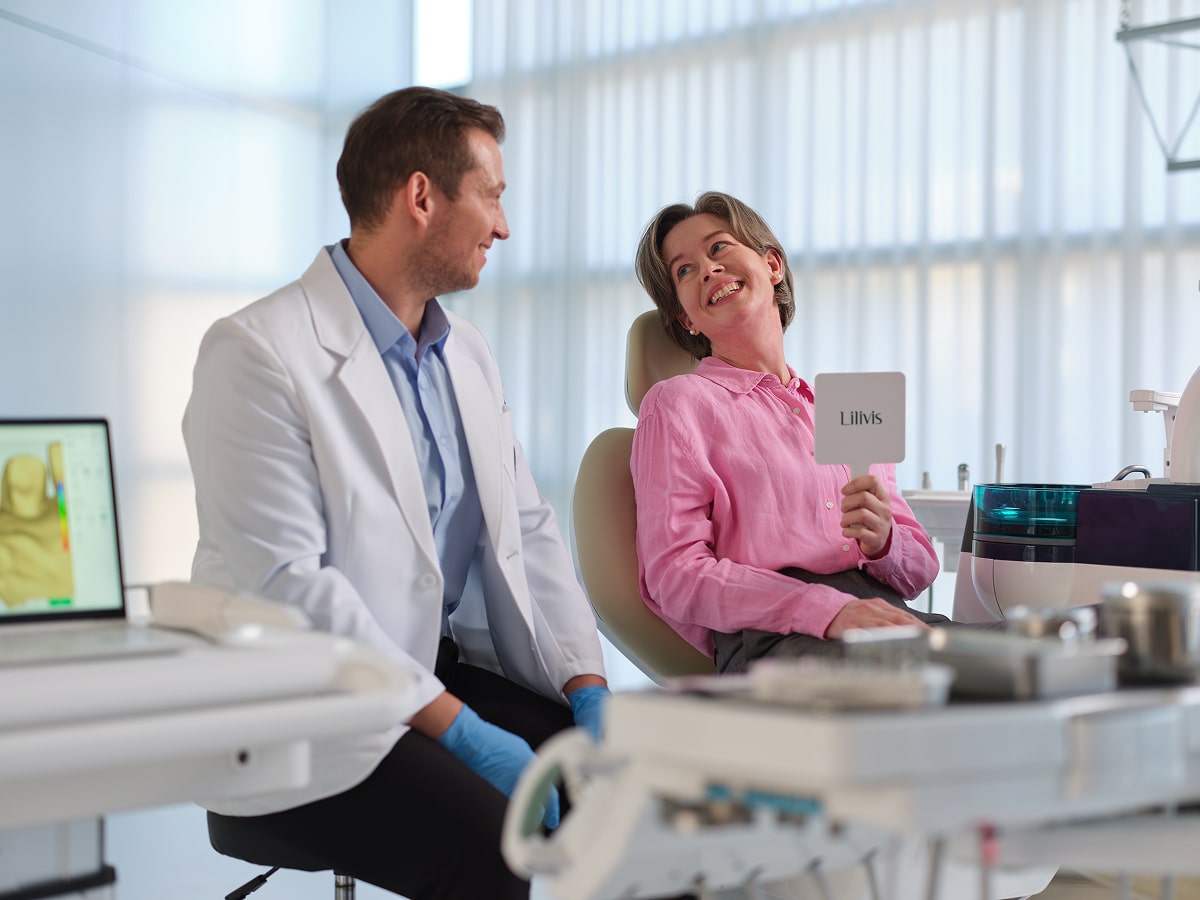
Esthetic prosthodontics was once understood as a two-layered treatment: first restoring function, then adding aesthetics on top. In other words, clinicians would create a prosthetic structure responsible for chewing and speech, and then ‘paint over’ esthetic form and color afterward.
However, with the concurrent development of digital technologies, material science, and a more refined sensitivity to patient experience, esthetic treatment no longer remains a method of stacking function and aesthetics in two separate layers.
Today, hybrid esthetic treatment can be seen as a process in which function and aesthetics are designed together from the very beginning, without being separated.
Masticatory-centered occlusal design, speech and oral muscular movement, support from the lips and cheeks, the overall proportion and expression of the face, and even the patient’s age, occupation, and self-image are all brought into a single design frame.
In other words, esthetic prosthodontics is no longer about placing a pretty shape on top of a structure made for chewing.
It is evolving into a creative process that organizes the differences generated by each patient’s unique face, expression, age, and tooth structure into a single functional–esthetic order.
The French philosopher Gilles Deleuze (1925–1995), who spoke of “a philosophy not of identity, but of difference,” offers a meaningful language for explaining this shift in esthetic treatment paradigms.
Traditional esthetic standards tended to assume one ideal tooth and one ideal smile, then tried to adjust each individual’s dentition and face to approximate that ideal as closely as possible. In that model, difference was often treated as a defect to be corrected.
By contrast, in the current flow of digital esthetic treatment, beauty is no longer a matter of imitating a single ideal form.
The slight rotation of a tooth captured in 3D scan data, an asymmetric smile line, age-related changes in enamel translucency and wear patterns, and even the amount of gingiva displayed when smiling and the tension pattern of the facial expression muscles—
all of these elements can be read not as noise to be erased, but as that person’s own esthetic resources.
In the CAD design phase, the patient’s individual differences are structurally expressed as parameters such as occlusal curvature, incisal edge length and incisal halo, and the range of motion formed by the teeth and lips.
These values are then precisely adjusted within the CAD environment, and the final morphology of the restoration is determined based on them.
The key in this process is not to replicate a predetermined “normal tooth” as-is.
Rather, the goal is to analyze the unique relationships created by the patient’s face, teeth, and expressions, and to design them so that these characteristics connect to a form that is functionally stable and esthetically natural.
Viewed in this way, hybrid esthetic treatment can be described as one mode in which Deleuze’s “way of thinking through difference” is implemented in clinical practice.
Instead of forcing patients into a uniform standard, the clinician reads, selects, emphasizes, and sometimes subtly adjusts each person’s differences
to create a new order—that is precisely the work that modern esthetic prosthodontics performs.
1. Digital Scanning: Why a Technology for “Reading Difference” Matters So Much
Digital scanning is the first clinical and esthetic act of reading the patient’s unique differences.
Today’s intraoral scanners offer precision in the range of 5–20 μm, which means that they do more than generate clear images: they convert fine rotations, inclinations, curvature, and surface texture of teeth into numerical data at a measurable level.
For example, even a 1–2 degree tilt of a central incisor can alter the balance of the entire smile line. Digital scanning captures such differences precisely in the form of 3D coordinates. This becomes a critical basis for deciding in the CAD stage whether to preserve that slight asymmetry or to reposition it within a new esthetic order.
On the surface of natural teeth, there are individual patterns such as grooves, facets, and wear directions. When this rhythm disappears, restorations easily look artificial. But if the scanner reads these features accurately, the laboratory can reproduce surface textures that are almost indistinguishable from natural teeth.
The micro-geometry of the margin, which determines the marginal fit of crowns and veneers, is likewise governed by scanning precision. In the study by Ferrini et al. (2023), CAD/CAM-fabricated zirconia crowns achieved an average marginal gap of about 21 μm, demonstrating that every step from scanning to design and fabrication is controlling this micro-region.¹ In this sense, μm-level precision can be considered the critical threshold that determines esthetic completeness.
Compared to traditional impressions, the superiority of digital scanning becomes even clearer. In the analog–digital hybrid workflow—silicone impressions → stone models → lab-side scanning—shrinkage, expansion, bubbles, and micro-distortions can occur at every step, gradually erasing the original tooth-specific differences.
Digital scanning, on the other hand, acquires 3D data directly in the oral cavity, passes it to CAD without loss, and then carries the same morphology through to CAM, printing, and milling.
This technical difference is also evident in clinical research. In the randomized controlled trial (RCT) by Sailer et al. (2017), crowns manufactured via a digital workflow maintained the same levels of fit, internal adjustment time, and final esthetic evaluation as conventional methods, while the dental technician’s active working time was reduced to about half (p. 2).
From a Deleuzian perspective, scanning is the act of preserving, rather than erasing, the pattern of differences unique to each person. All subsequent steps—CAD, CAM, material selection, and tooth reduction planning—become processes of organizing and materializing this original data.
Thus, digital scanning is both the starting point of the aesthetics of difference running through the entirety of hybrid esthetic treatment, and the first technical–philosophical foundation that allows the patient’s unique beauty to be realized in clinical practice.
2. CAD Design: The Stage Where Difference Is Organized into Form
In CAD design, values such as the length and width of incisors, canine height, and their relationship to the smile line are adjusted as proportional parameters. Especially in anterior veneers and crowns, this proportional setting strongly influences the overall impression of the smile, making it one of the most carefully managed variables during the design phase.
Line angles, proximal curvature, and the degree of rounding at the incisal edge are also controlled through radius and slope values. These subtle adjustments are key factors distinguishing artificial-looking teeth from natural-looking ones.
In CAD/CAM design, parameters such as restoration thickness, coping offset, and cement space (e.g., around 30 μm) are configured simultaneously. These values also affect how light passes through and reflects within the restoration.
Most CAD systems provide default tooth libraries representing an “ideal tooth” form. However, if this default shape is applied as-is, the result can lack harmony with adjacent teeth or fail to match the distinctive characteristics of the patient’s face, lips, and smile line.
In real esthetic treatments, libraries are increasingly used only as a basic framework, while the final design is individually adjusted based on asymmetries, wear patterns, and line angles captured in scan data. In other words, the CAD design phase tends not to eliminate morphological deviations, but rather to tidy and refine them within reasonable limits while preserving the patient’s unique traits.
In digital workflows, the CAD design time is generally standardized at around 10–14 minutes, yet remains far shorter than traditional wax-up techniques while allowing consistent shapes to be reproduced repeatedly (2017, p. 8). When we consider this together with the marginal gap findings by Ferrini et al., it becomes clear that cement space, coping thickness, and margin design set in the CAD phase are transferred almost intact into CAM and 3D printing. This yields marginal fits of about 21 μm for zirconia crowns and around 60 μm for lithium disilicate crowns in clinical reality.
This level of precision is not a mere numerical achievement; it is directly linked to prognosis. The more accurate the margin, the lower the risk of microleakage, cement dissolution, and secondary caries, and the less likely debonding and fracture become.
Thus, how accurately the CAD phase reflects patient-specific data has become a core determinant not only of esthetics, but also of function and durability.
3. CAM and 3D Printing: Where Design Is Transformed into Material
The shape and numerical information refined in the CAD stage are converted into actual restorations through CAM and 3D printing. Here, the critical factors are precision—including marginal fit—as well as material properties and the level of manufacturing technology.
The greatest feature of printing is that it provides a platform where form and material can be designed together. Because it allows multi-layer and multi-material stacking—making specific regions more translucent, others stronger, or altering color and chroma by region—it offers a foundation for finely reproducing the internal structure, color gradients, and optical characteristics of natural teeth.
The roles of milling and printing are also becoming more clearly differentiated. Milling is an already proven technology optimized for high-speed processing of monolithic material blocks with excellent precision and reproducibility. Printing, in contrast, excels in complex shapes, internal structures, and expression of color/translucency gradients, and has advantages in terms of reduced raw material usage and waste.
Considering this, it is highly likely that future esthetic prosthodontics will adopt a hybrid fabrication model in which the core responsible for basic structure, occlusion, and load is milled in zirconia, while the outer layer—including translucency, color, and texture—is realized via printing or layered techniques.
For thin and delicate restorations such as inlays, onlays, and veneers, printed LS2 may be suitable, while milled zirconia will likely remain the mainstay for areas where strength is the top priority, such as bridges and implant abutments.
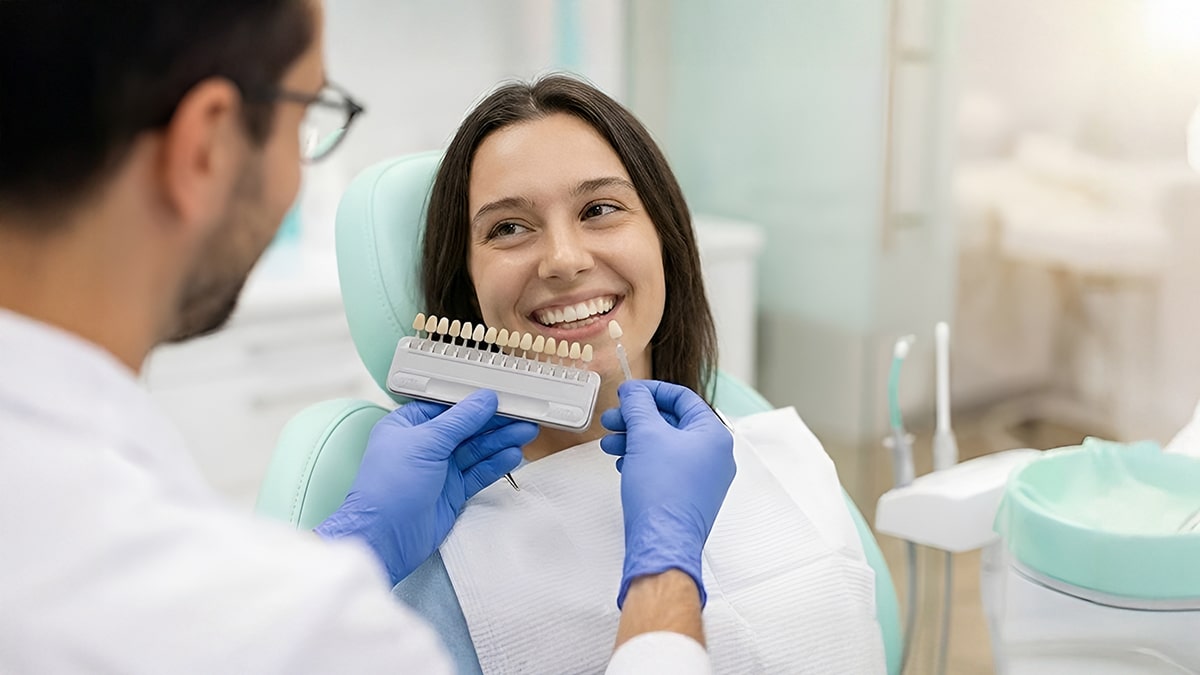
4. Materials That Reproduce the Structure and Optical Properties of Natural Teeth
In hybrid esthetic treatment, zirconia and lithium disilicate (LS2) are representative materials that reproduce the structural and optical characteristics of natural teeth in different ways. These two materials differ significantly in strength, translucency, fracture toughness, and surface texture, and are chosen complementarily depending on the location of the restoration and the level of esthetic demand.
Zirconia: Focus on High Strength and Structural Stability
Zirconia is a polycrystalline ceramic with no glass matrix. This structure provides high strength and fracture resistance, and with advances in CAD/CAM milling and 3D printing, its processing precision has steadily improved.
- ▪️Flexural strength: ~700–1,200 MPa
(decreasing to ~600–800 MPa as translucency increases) - ▪️Fracture toughness: around 4–5 MPa·√m
- ▪️Surface hardness: high, stable against wear and load
- ▪️Indications:
Posterior crowns, bridges, implant superstructures, and other high-load areas
Recent multilayer zirconia designs increase the cubic phase ratio in the upper region to improve translucency, while increasing the tetragonal phase in the lower region to maintain strength, thereby attempting to functionally and optically mimic the “enamel–dentin–core” layered structure of natural teeth. However, there is a trade-off: as the cubic phase ratio increases, strength tends to decrease.
Lithium Disilicate (LS2): Focus on Natural-Looking Optical Properties
Lithium disilicate features a glass matrix with needle-like crystals dispersed at approximately 60–70 vol%. This microstructure enables light transmission, scattering, and reflection similar to those of natural teeth.
- ▪️Flexural strength: about 330–400 MPa
- ▪️Fracture toughness: about 2.5–3.0 MPa·√m
- ▪️Optical advantages:
Translucency, color stability, and luster very close to natural teeth
→ Enables a natural look that is “translucent but not dull” - ▪️Indications:
Anterior veneers, single anterior crowns, laminates, and other esthetically critical areas - ▪️Clinical use:
First-choice material when color, translucency, and luster must be matched precisely with adjacent natural teeth
5. Ultra-Thin Veneers and Minimal Invasiveness: Design Centered on Preservation, Not Reduction
Ultra-thin veneers are the most representative form illustrating the direction of minimally invasive esthetic treatment. According to the review by E. Borie et al. (2021), ultra-thin veneers are typically 0.1–0.3 mm thick, and tooth preparation is either absent (no-prep) or limited within the enamel. Materials are mostly highly translucent feldspathic porcelain or lithium disilicate. Because enamel is preserved to the greatest extent possible, natural optical properties can be utilized almost intact. As a result, the outcome feels less like placing a new prosthesis and more like subtly organizing and refining the existing tooth structure, color, and translucency (p. 899).
However, no-prep veneers are not always the best option. Case reports show that while no-prep veneers may initially seem attractive because they require no anesthesia and virtually no reduction, they pose several long-term limitations. When ceramic simply overlays the entire crown, overcontour is easily formed, which can lead to gingival irritation, plaque accumulation, and marginal discoloration.
If there is no preparation at all, it becomes ambiguous for the technician to determine where to place the margin. Cement lines may become more visible in the mouth, and over time there is a higher risk of boundary discoloration and margin staining. In fact, there are reports of no-prep ultra-thin veneers needing replacement after six years due to marginal discoloration (pp. 900–901).
For this reason, many authors recommend that 0.1–0.3 mm of enamel be carefully reduced within the enamel range, as this is actually safer for esthetics, bonding, and periodontal health. Through minimal preparation, protrusive areas can be corrected and line angles refined so that the veneer appears not as a separate plate simply placed on the tooth, but as a form continuous with the original tooth structure.
Ultimately, the crucial question in ultra-thin, minimally invasive esthetic treatment is not “How little can we grind?” but rather,
“To what extent should we preserve natural tooth structure so that function, esthetics, and durability are simultaneously optimized?”
Minimal invasiveness is better understood not as a technique for reducing less, but as a way of designing treatment with a focus on what should be preserved.
6. The Direction of Contemporary Esthetic Treatment Based on Digital Workflows
When we synthesize recent research and clinical data, esthetic prosthodontics is no longer a technique for producing standardized, idealized smiles. The persuasive power of universally applied norms for dentition and smiles is fading. In their place, individualized approaches that reflect each patient’s oral structure, functional needs, soft-tissue condition, and esthetic preferences are becoming central.
In the scanning phase, intraoral scanners capture teeth, gingiva, occlusion, and, when necessary, parts of the face with μm-level precision, recording the patient’s asymmetries and morphological characteristics as they are.
In the CAD design phase, this data serves as the foundation for determining the restoration shape while considering function, esthetics, and material properties together. Libraries are used merely for reference; final designs are adjusted into individualized forms that incorporate the patient’s face, expression, age, and occupational/social context.
In the fabrication phase—CAM, printing, and milling—high-performance ceramics such as zirconia and lithium disilicate are used to materialize the designed forms. At this point, marginal accuracy, strength, translucency, and surface texture are fine-tuned to approximate the structure and optical properties of natural teeth as closely as possible. The restoration is designed not as a simple substitute, but as a composite structure that harmonizes functionally and esthetically with existing teeth.
Tooth reduction and minimally invasive strategies can be viewed as clinical judgments and technical choices about how much natural structure should be preserved. Ultra-thin veneers and minimally invasive designs are not about simply cutting less, but about finding the optimal preservation range where function, esthetics, and durability are all satisfied.
All of these steps—scanning, design, fabrication, material selection, and tooth reduction planning—ultimately converge on the same goal:
to read each patient’s condition and needs accurately, select appropriate structures and materials, and achieve stable, long-term, esthetic outcomes.
The digital infrastructure precisely engineered to realize this direction in clinical practice is the full digital workflow of SCAN → CAD → PRINT → MILL. On this workflow, Lilivis functions as a practical platform for delivering esthetic and functional restorations based on patient-specific data.
[References]
- 1. Ferrini, Francesco, et al. "SEM evaluation of the marginal accuracy of zirconia, lithium disilicate, and composite single crowns created by CAD/CAM method: comparative analysis of different materials." Materials 16.6 (2023): 2413.
- 2. Sailer, Irena, et al. "Randomized controlled within-subject evaluation of digital and conventional workflows for the fabrication of lithium disilicate single crowns. Part II: CAD-CAM versus conventional laboratory procedures." The Journal of prosthetic dentistry 118.1 (2017): 43-48.
- 3. Ultrafinos, Laminados, and Un Estado del Arte Actualizado. "Ultra-Thin Veneers: a Current State-of-the-Art." Int. J. Odontostomat 15.4 (2021): 898-903.
- PrevPersonalized Smile, Designed for Your Life 25.12.11
- NextPatient-Centered Smart Dental Care 25.11.21
 Inquiry