


Lilivis SCAN : Start Digital Dentistry with Ease
페이지 정보

본문
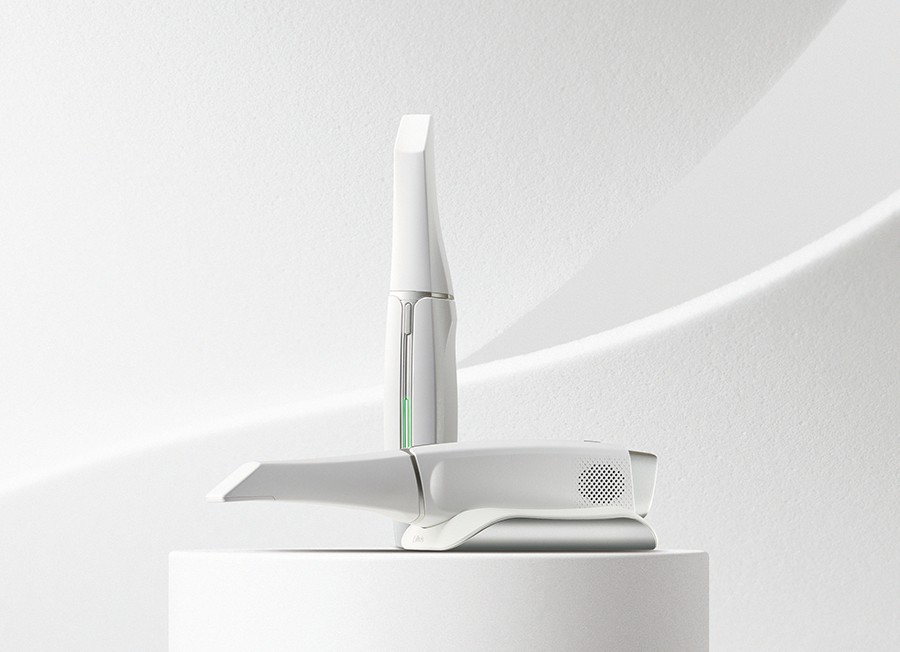
Q1. Can you explain how an intraoral scanner works?
The optical principle of an intraoral scanner is quite straightforward. In simple terms, light is projected onto the surface, reflected back, collected by sensors, and then processed by software.
The scanner emits light onto the teeth and gums, and the reflected light is captured by lenses and sensors to generate a digital image. This process rapidly acquires thousands of images per second, which are then used to build a real-time 3D model.
When light sources such as LEDs, lasers, or structured light project a pattern onto the surface of the teeth and gingiva, the image sensor captures the reflected light at high speed. The scanner then calculates the depth (Z-coordinate) of each surface point by analyzing differences in phase, brightness, focus, and parallax of the reflected light.
Optical Technologies in Intraoral Scanners
First is Triangulation. This method uses one or more cameras and a light source, or two or more cameras, to measure the angle between a reference point and the observed point. Using trigonometric calculations, the system determines the position and distance of unknown points. In optics, light is projected and the reflected light’s angle and distance to the sensor are measured to compute 3D coordinates.
Inside the intraoral scanner, lasers and cameras are arranged at fixed intervals and angles, forming a stable baseline. The scanner projects optical patterns such as stripes or dots onto the tooth surface. As this light reflects back, the camera records the 2D coordinates of the pattern. Depending on the tooth’s topography, the position and shape of the reflected pattern change, embedding surface information into the image itself. Based on the captured image coordinates, light source position, and camera parameters, the scanner mathematically reconstructs the 3D coordinates along the path of each light ray. Essentially, the light path from source to tooth and back to the camera forms the basis for 3D measurement.
Next is the Confocal method, which allows only light focused precisely on the focal plane to pass through the sensor, while out-of-focus light is eliminated. By shifting the focal plane and combining multiple images, highly accurate depth information can be obtained.
Another technique is Active Wavefront Sampling (AWS). In this method, the optical module collects images from multiple viewpoints and applies cross-correlation analysis to extract 3D information.
An intraoral scanner is essentially a real-time 3D imaging device. It captures 50–60 frames per second, with features like an anti-fog tip to prevent intraoral fogging and a polarizer to reduce glare, ensuring clear image capture. The system extracts edges and corner points from images to calculate the scanner tip’s position and orientation, generating a point cloud to determine depth coordinates. Afterward, frame registration and noise reduction are applied. Finally, meshing and texturing processes create a realistic, full-color 3D model.
Q2. Could you briefly introduce Huvitz and its optical expertise?
Huvitz is a company with over 27 years of accumulated expertise in precision optics, spanning design, manufacturing, and algorithm development. Starting from ophthalmic and digital imaging devices, the company has successfully transferred its core technologies into dental intraoral scanners.
From vision testers and fundus cameras to corneal tomography systems, Huvitz has built deep know-how in areas such as light source design, aberration correction, and stray light suppression. This foundation extends to component engineering—including polarizers and AR coatings—as well as precision assembly and calibration, all handled in-house.
By applying solutions to critical challenges in ophthalmic equipment—such as micro-signal detection, reflected light control, and color accuracy—Huvitz has elevated the clinical reliability and quality of the Lilivis intraoral scanner to a new standard.
Q3. What patents are associated with the Lilivis intraoral scanner?
The Lilivis SCAN LS-100 is backed by Huvitz’s precision optical technology and is protected by multiple patents. These patents not only cover optical system design but also ensure the accuracy, usability, and durability required in real clinical environments.
- ▪️ Wireless intraoral scanner technology
Filed in Korea (2024), this patent enables stable data transmission without wired connections, significantly enhancing portability and convenience in clinical settings. - ▪️Precision calibration technology
Filed in the U.S., Europe, and Korea, this patent covers an automatic calibration method that compensates for optical deviations occurring during repeated use, ensuring long-term data accuracy. - ▪️Tomographic scanning capability
Filed in the U.S., Europe, China, and Korea, this patent introduces the ability to capture tomographic layers of teeth and oral structures—beyond conventional surface imaging. It secures depth information, enabling highly precise diagnosis in cavities and interdental regions, as well as greater accuracy in defining restoration margins.
Q4. Could you summarize the key features of the Lilivis SCAN LS-100?
One of the biggest reasons dentists hesitate to adopt intraoral scanners is the perceived complexity of use and the burden of training. Many existing devices have complicated functions and require a long learning curve before being fully integrated into clinical practice.
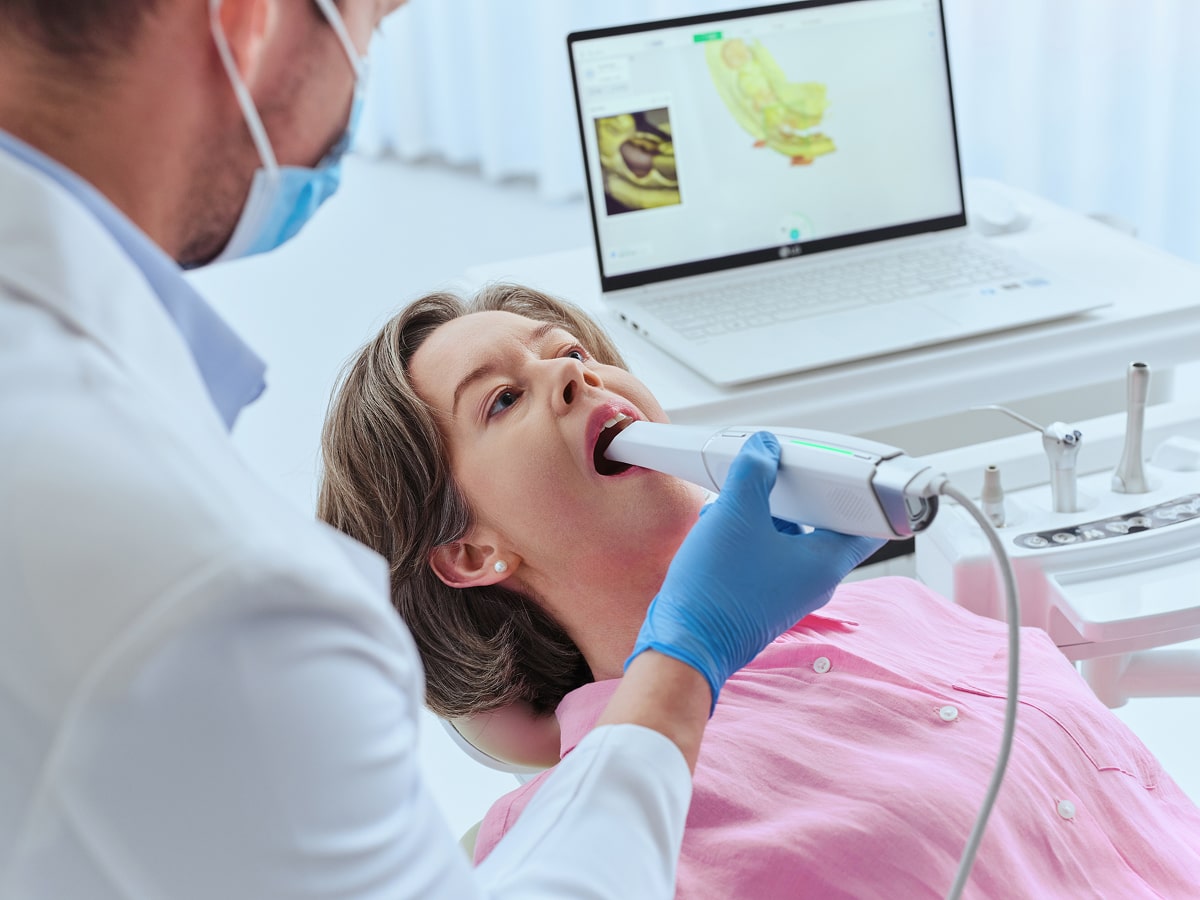
The Lilivis SCAN LS-100 is designed to minimize these barriers. Thanks to its intuitive interface and simplified workflow, users can begin scanning immediately without extensive training. In fact, even a short guide session is enough to master its essential functions and apply them directly in patient care.
The software environment is also highly user-friendly. From reviewing and editing scan data to integrating with CAD, the process requires only simple clicks and drags—no complicated menus. This lowers the entry barrier and allows clinics to quickly transition into digital workflows, making the LS-100 a clear differentiator in the market.
- ▪️Fast and accurate scanning
The LS-100 supports high-speed scanning at 50–60 frames per second. With AI-driven data filtering, it removes unnecessary soft tissue and noise, capturing only the relevant structures of teeth and restorations. - ▪️Superior metal scanning
Many intraoral scanners struggle with reflective metal surfaces. The LS-100 overcomes this through precision optical design and advanced software filtering, effectively suppressing glare and scattered light. As a result, metal restorations are captured without distortion, and adjacent teeth are seamlessly integrated into the dataset. - ▪️CAD software included
Bundled with the LS-100 is L-CAD, which offers AI-powered features such as automatic margin line detection, insertion axis suggestions, and restoration position proposals. This makes designing crowns, bridges, and other prosthetics much easier. With open formats (STL, OBJ, PLY), the software ensures strong compatibility with third-party systems, giving clinicians flexibility in their CAD workflows. - ▪️Cost-effective pricing
The LS-100 emphasizes affordability as a key differentiator. By lowering the initial investment cost and eliminating subscription fees, it allows not only large hospitals but also small to mid-sized clinics to easily adopt digital dentistry—while significantly reducing operational expenses.
Q5. What value does this product bring to the dental industry?
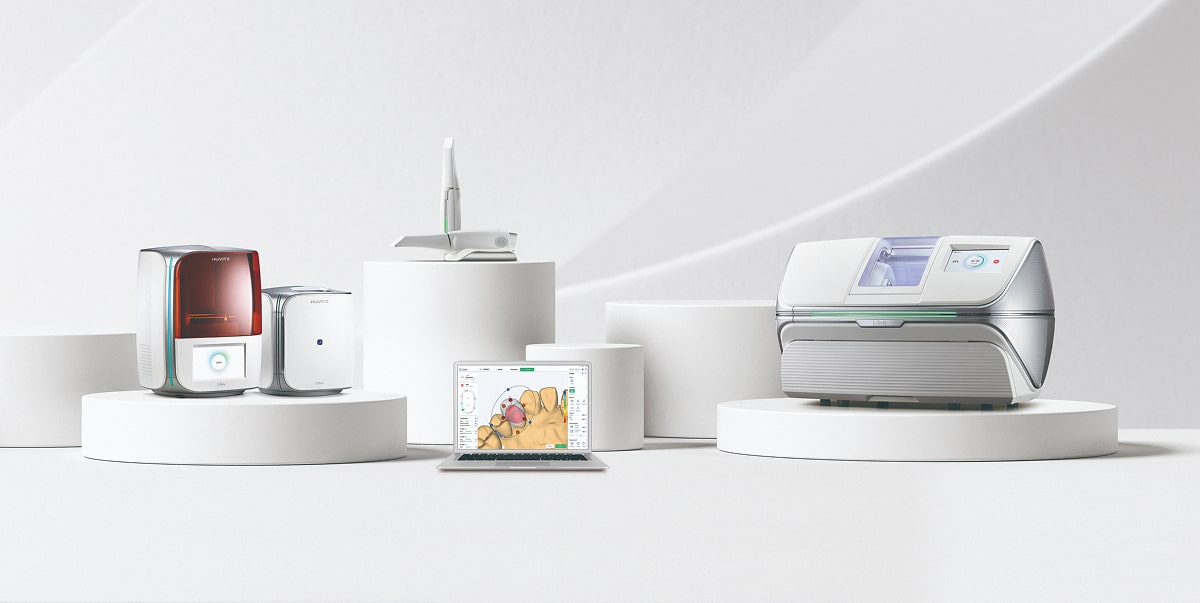
The Lilivis brand offers a comprehensive portfolio—including intraoral scanners, 3D printers, CAD/CAM software, milling machines, and implants. This total solution goes beyond the performance of individual devices, connecting the entire digital dentistry workflow into one seamless system.
At the heart of this ecosystem, the Lilivis SCAN LS-100 serves as the starting point for digital treatment. By enabling precise intraoral scanning, it integrates smoothly with CAD design, CAM manufacturing, and 3D printing—all within a unified workflow. Clinics can easily transmit scan data directly to CAD and then to printers or milling machines, without the need for complex compatibility steps.
This efficiency not only accelerates treatment speed but also improves the precision and reproducibility of prosthetics, thereby increasing patient satisfaction. Ultimately, the full Lilivis workflow provides a strong foundation for elevating the overall quality of dental care.
 Inquiry